


Mullite Insulation Brick
Your Professional Mullite Insulation Brick Supplier
Our goal is to become your true partner in the field of mullite insulation brick in China. Kerui refractory is the concentration of refractory industry in China. Kerui is deeply rooted in the high-temperature kiln industry, building its own R&D centre. We have a skilled engineering team dedicated to refining every stage, from product development and process improvement to production oversight, ensuring every product delivered meets rigorous quality and performance standards. The price is competitive and the product is quality-assured, which is a good choice for your long-term cooperation.


Why Choose Us
Product application: Our main products include more than 200 varieties of organic pressed refractories, unshaped refractories, bricks for carbon roasting furnaces, functional refractories, etc. The products are used in high-temperature kilns and equipment in metallurgy, chemical industry, building materials, electricity, non-ferrous metals, carbon industry and other industries.
Product market: Our refractory products have been sold to Russia, South Korea, Ukraine, Brazil, Indonesia, Iran, Thailand and other countries.
Our production capacity: Our annual production capacity of shaped refractory products is 150,000 tons, and the capacity of unshaped refractory products is 100,000 tons.
Our services: In the pre-sales stage, our team of experts will recommend the most suitable products according to the needs of customers and provide detailed technical consultation. During the sales period, we ensure timely delivery and provide installation guidance. For after-sales, we provide long-term technical support, warranty services and spare parts to help customers maximize the use of products and get reliable maintenance during use.
Advantages of Mullite Insulation Brick
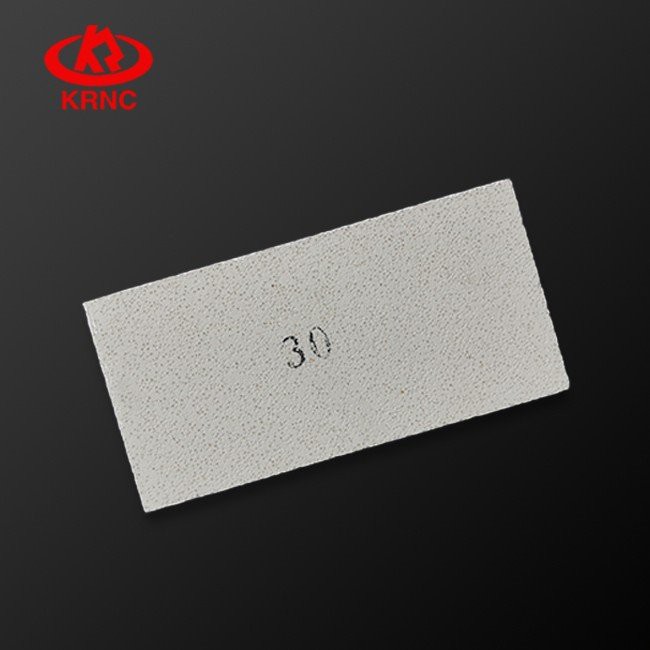


Superior thermal insulation: Mullite insulation brick exhibits outstanding thermal insulation capabilities, effectively minimizing heat transfer and reducing thermal losses in high-temperature environments.
Lightweight construction: As a lightweight refractory material, high performance mullite insulation brick offers ease of handling and installation, reducing labor costs and construction time. Its lightweight nature also minimizes structural loads on equipment and support structures, enhancing overall operational efficiency.
High temperature resistance: Mullite insulation brick possesses excellent resistance to high temperatures, withstanding continuous operating temperatures ranging from 1200°c to 1800°c (2192°f to 3272°f) depending on the specific formulation and application. This makes it suitable for use in furnaces, kilns, and other heat-intensive industrial processes.
Thermal shock resistance: The inherent thermal shock resistance of mullite insulation brick allows it to withstand rapid temperature fluctuations without cracking or spalling. This property is particularly beneficial in applications involving cyclic heating and cooling, ensuring long-term durability and reliability.
Chemical stability: Mullite insulation brick exhibits excellent chemical stability, resisting the corrosive effects of molten metals, slag, and harsh chemicals encountered in various industrial processes. Its inert nature helps prolong equipment lifespan and minimize maintenance requirements, resulting in cost savings over time.
Uniform thermal performance: The homogeneous microstructure of refractory products ensures uniform thermal performance throughout its service life. This consistency in thermal insulation properties helps maintain process stability and product quality in applications where temperature uniformity is critical.
Mullite Insulation Brick Specification
|
Index |
|
Volume |
Reheating |
Cold |
Bending |
Thermal |
|
- |
- |
G/cm3 |
1400℃*12h,% |
Mpa |
Mpa |
350℃w/m·k |
|
JM30 |
A |
1 |
-0.8 |
3 |
1.8 |
0.4 |
|
JM30 |
B |
1.1 |
-0.7 |
3.5 |
1.9 |
0.43 |
|
JM32 |
A |
1.1 |
-0.8 |
3.6 |
1.9 |
0.43 |
|
JM32 |
B |
1.2 |
-0.7 |
3.8 |
2 |
0.46 |
Features of Mullite Insulation Brick

Thermal insulation
Mullite insulation brick has low thermal conductivity, 0.4 - 0.46 w/m·k at 350℃, which can effectively prevent heat transfer and reduce heat loss.

Thermal stability
After high temperature treatment at 1400℃*12h, the reheating linear change of mullite insulation brick is extremely small, as low as -0.7% - -0.8%, and the dimensional change is small.

High mechanical strength
Mullite insulation brick has a cold compression strength of 3 - 3.8 mpa and a room temperature bending strength of 1.8 - 2 mpa. It can withstand certain external forces during transportation, installation and use and is not easily damaged.
Types of Mullite Insulation Brick
Zirconium mullite brick
By adding zro2 into the a12o3-sio2 series brick to improve the structure of mullite, it can improve the chemical corrosion resistance, thermal shock resistance and reduce the expansion coefficient of mullite.
Sintered mullite brick
Sintered mullite brick is a synthetic mullite made of aluminum and silicon oxides or other compounds and aluminosilicate minerals as raw materials. Refractory bricks sintered at high temperature.
Fused mullite brick
Mullite bricks prepared by melting-solidification crystallization process are called fused mullite bricks. The columnar mullite crystals in the bricks can reach the millimeter level. By changing the process system, the mullite crystals can be controlled to be smaller in size.
Corundum mullite brick
Corundum mullite bricks are high-alumina refractory bricks composed of main crystal phases of corundum and mullite. Corundum mullite bricks refer to refractory bricks made of high-purity or relatively pure raw materials.
Application of Mullite Insulation Brick
Industrial furnace lining: Mullite insulation brick is mainly used for industrial furnace lining in ceramic, glass, metallurgy, chemical and other industries. In these fields, it can withstand high temperature environment, maintain the integrity of the furnace structure, and reduce heat loss.
High temperature pipe and flue insulation: Mullite insulation brick is also commonly used as the insulation layer of high temperature pipes and flues. It can effectively prevent pipes and flues from being damaged due to temperature changes and ensure the safe operation of equipment.
Petroleum cracking system furnace lining: In the petroleum cracking system, mullite insulation brick is used as a furnace lining material to withstand high temperature and complex chemical reaction environment and protect the furnace structure from erosion.
Aerospace and nuclear industry: Mullite insulation brick is also used in high-tech fields such as aerospace and nuclear industry. In the aerospace field, it is used as the insulation layer of rocket engines; in the nuclear industry, it is used to manufacture high temperature resistant components of reactors to ensure the safe operation of nuclear facilities.
Raw material selection
The primary raw material for lightweight mullite insulation bricks is mullite, with small amounts of alumina, calcium oxide, and other additives. The choice of raw materials directly impacts the brick’s performance and lifespan.
Crushing
The raw materials are crushed to achieve a uniform particle size, which is essential for consistent mixing and forming in later stages.
Mixing
The crushed raw materials are mixed together, with water and binding agents added to ensure proper bonding of all components, resulting in a uniform slurry.
Forming
The mixed slurry is shaped using methods such as pressing or casting, producing lightweight mullite insulation bricks in various shapes and sizes to meet specific requirements.
Firing
The shaped bricks are then fired at high temperatures, typically between 1400-1600°c, to stabilize their structure and enhance their refractory properties. The firing duration depends on the thickness and size of the product.
Packing and Shipping of Mullite Insulation Brick
|
Packing |
In wooden pallets or crates |
|
Shipping |
Shipped by road, sea, rail |