


Magnesia Bricks
Why Choose Us
QC
In the production, Kerui adhere to the use of sophisticated equipment and technology, respectively, to ensure the precision of powder ratio, improve the strength and refractories of refractory products, reduce the rate of defective products, to ensure the stability and reliability of product quality.
Excellent technical team
Kerui has a complete pre-sale technical team and standardized customer service consultation process to provide customers with the design, production, construction and maintenance of the overall furnace refractory, and help customers quickly select the appropriate furnace construction and maintenance plan.
Construction technical support
In order to give full play to the performance of refractory materials and effectively improve the service life of the kiln, a good construction scheme and execution is very important.Kerui has its own five construction teams, covering the construction and maintenance of more than 100 commonly used refractory materials for kilns in steel, non-ferrous metal smelting, petrochemical, building materials and other industries.
After-sales service!
In addition to the product quality guarantee period, our company still undertake the after-sales service obligations, and provide you with the corresponding products, seriously for you to solve the problem (the corresponding fee is charged at cost).
What is Magnesia Bricks
Magnesia brick is an alkaline refractory brick made of magnesia as the main component and periclase as the main crystal phase. Its magnesium oxide content is 91%-97%. Magnesium bricks have high refractoriness, and have good corrosion resistance to iron oxides, alkaline slag and high-calcium fluxes. But the thermal shock resistance is poor.

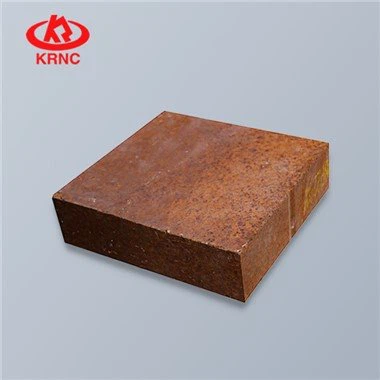
Benefits of Magnesia Bricks
Excellent High-Temperature Resistance
Mag bricks are resistant to structural damage even at temperatures of up to 3000°C (5432°F). They are able to be employed in applications where other materials would fail because of their excellent temperature tolerance.
Good Thermal Conductivity
Due to their excellent thermal conductivity, these bricks are effective in transferring heat. In applications like furnaces and kilns where even heat dispersion is crucial, this characteristic is advantageous.
High Compressive Strength
Mag bricks have a high compressive strength, which enables them to support large loads. Even under challenging circumstances, its strength guarantees the construction’s structural integrity.
Low Thermal Expansion
When subjected to abrupt temperature fluctuations, the low thermal expansion of these bricks helps reduce the possibility of cracking or spalling. It permits the bricks to swell and shrink without suffering serious harm.
Direct-Bonded Magnesite Bricks
Magnesite grains are combined with a high-purity magnesia binder to create direct-bonded magnesite bricks. These bricks are ideal for use in the steelmaking and non-ferrous metal industries because of their superior corrosion resistance and strong thermal conductivity.
Fused Magnesite Bricks
In order to create fused magnesite bricks, raw materials for magnesia must first be melted in an electric arc furnace, then the molten material must be cooled and solidified. High-density, exceptional thermal shock resistance, and high refractoriness bricks are produced as a result of this method. They are frequently employed in situations involving high temperatures.
Burned Magnesite Bricks
In order to create burned magnesite bricks, raw materials for magnesia are heated to a high temperature, cooled, and then shaped. These bricks are frequently employed in a variety of high-temperature industrial furnaces and have strong thermal shock resistance.
Chemically Bonded Magnesite Bricks
Magnesia is combined with an appropriate chemical binder, such as an alkali metal phosphate, to create chemically bound magnesite bricks. These bricks are frequently used in cement and lime kilns and have strong resistance to slag corrosion.
Application of Magnesia Bricks


Steel Industry
One of the most prominent applications of magnesia bricks is in the steel industry, particularly in the construction of steelmaking furnaces and ladles. The refractory lining of these furnaces faces extreme conditions, including high temperatures and chemical reactions. Magnesia bricks' resistance to both heat and basic slag corrosion makes them an ideal choice for these critical areas. They help maintain the integrity of the furnace lining, ensuring consistent and efficient steel production.
Cement Industry
The cement industry relies on magnesia bricks in the construction of rotary kilns, which are essential for clinker production. These kilns operate at temperatures exceeding 1,400°C, and magnesia bricks excel in such harsh conditions. Their ability to withstand high temperatures and resist the corrosive effects of alkaline materials is vital for prolonged kiln life and cost-effective cement production.
Glass Industry
In the glass industry, magnesia bricks are used to line regenerators and glass melting furnaces. Glass production involves extremely high temperatures, and these bricks provide both excellent heat resistance and minimal thermal expansion, ensuring the stability of the furnace structure and prolonged service life.
Non-Ferrous Metallurgy
Magnesia bricks also find applications in non-ferrous metallurgy, such as in the construction of copper and nickel smelting furnaces. These furnaces operate at elevated temperatures, and the resistance to corrosion and thermal stress exhibited by magnesia bricks is indispensable for their performance and longevity.
Magnesia Bricks Have Several Outstanding Characteristics
High Melting Point
Magnesia bricks can withstand extremely high temperatures, making them ideal for industries involving intense heat, such as steel manufacturing.
Corrosion Resistance
They are highly resistant to chemical corrosion, especially by basic slag, which is crucial in the production of steel and cement.
Thermal Insulation
Magnesia bricks possess excellent thermal insulation properties, ensuring energy efficiency in high-temperature processes.
Low Thermal Expansion
Their low thermal expansion rate minimizes the risk of cracking and structural damage under extreme heat.
Composition of Magnesite Bricks
Magnesium Oxide (MgO)
The main substance in magnesite bricks is magnesium oxide, sometimes called magnesia. It gives the bricks solidity and resilience to high temperatures.
01
Silica (SiO2)
Magnesite bricks are strengthened and have their thermal expansion reduced by the addition of silica. Additionally, it contributes to the bricks’ improved refractoriness.
02
Iron Oxide (Fe2O3)
During the firing process, iron oxide functions as a fluxing agent and lowers the fusion temperature of magnesite bricks. Additionally, it gives the color of the brick.
03
Calcium Oxide (CaO)
Bricks are given calcium oxide to increase their workability and lessen shrinkage while being manufactured. Additionally, the bricks’ resilience to thermal shock is improved.
04
Alumina (Al2O3)
To improve the mechanical strength and corrosion resistance of mag bricks, alumina is added to the mix.
05
Bulk density and porosity
Bulk density and porosity are key indicators of a brick's durability and thermal conductivity. High bulk density generally means higher strength and better resistance to slag and erosion. On the other hand, lower porosity ensures better resistance to chemical attacks and reduces the likelihood of the brick absorbing harmful substances.when selecting a high alumina fire brick, check the manufacturer's specifications for bulk density and porosity to ensure they meet the demands of your application. Typically, a good quality high alumina fire brick should have a bulk density of around 2.3-3.0 g/cm³ and low porosity, preferably below 20%.
Cold crushing strength (ccs)
Cold crushing strength (ccs) is a measure of a brick's mechanical strength, or its ability to withstand physical forces without breaking. This is particularly important in high-stress environments where the bricks will be supporting heavy loads or exposed to abrasive materials. High-quality high alumina magnesia bricks should have a ccs of at least 70-100 mpa.
Chemical resistance
High alumina magnesia bricks should have good resistance to chemical attacks, particularly from slags, gases, and other corrosive substances encountered in high-temperature environments. The chemical composition of the brick should be considered, especially its ability to resist alkalis, acids, and other chemicals present in the operating environment.
Dimensional accuracy
Dimensional accuracy is crucial for proper installation and ensuring a tight, seamless fit in the furnace or kiln lining. Poorly dimensioned bricks can lead to gaps, resulting in heat loss and reduced efficiency. Magnesia bricks are manufactured with precise dimensions, ensuring a perfect fit and optimal thermal performance.
Brand reputation and certifications
Finally, consider the reputation of the manufacturer or supplier. Established brands with a history of producing high-quality refractory materials are generally more reliable. Look for certifications that verify the quality and performance of the magnesia bricks, such as iso 9001 or other industry-specific standards.
Process of Magnesia Bricks
When mixing, the graphite should be balanced with magnesia particles, the order of feeding should be: magnesia particles → binder → graphite → fine magnesia powder, and additional powder. Due to the large amount of graphite, low density, and very few additives, it takes a long time to mix, but if the mixing time is too long, the graphite and fine powder around the magnesia particles will easily fall, so the mixing time is just right.
The production of MgO-C bricks is important for the construction of refractory bricks: the quality and quantity of graphite added to the ingredients are very important. Due to the large amount of graphite in the dirt and the small particles of the aggregate, it is better to use high pressure pressure and pressure control methods of light weight first, heavy pressure, and pressures many to avoid creating cracks. It is better to take control measures for cleaning, fatigue and pressure. In addition, the surface of adobe created by high pressure is very smooth, and it is easy to slip during handling and construction. Therefore, The finished adobe should be sanded or coated with a cooling resin 0.1-2mm thick to form a resin film to prevent it from slipping.. This treatment is called anti-skid treatment .
Cast magnesia adobe coal must be hardened before use, and the heat loss of hardening has a great influence on the performance of refractory bricks. Research has shown that the hardening treatment at 200-250°C is best for ensuring high brick density and reducing porosity. When it is higher than 250°C or below 200°C, annealing can have negative effects. It is necessary to control the air. Usually at 50-60°C, due to the softening of the resin, it should be properly heated; at 100-110°C, because a lot of metal is released, it needs to be heated; at 200-250°C, to complete the reaction, and to be properly heated.
Kerui Refractory has now become one of the powerful refractory enterprises in the research, development, production and sales of refractory products, and its product uses cover the use of refractory materials for high-temperature kilns and equipment in metallurgy, chemical industry, building materials, electric power, military industry, non-ferrous metals, carbon industry and other industries. Kerui Refractory produces 150000 tons of sintered products and 100000 tons of unshaped refractory materials annually. The company has four plants, namely heavy bricks, light bricks, unshaped bricks and fused bricks.


Certificates


