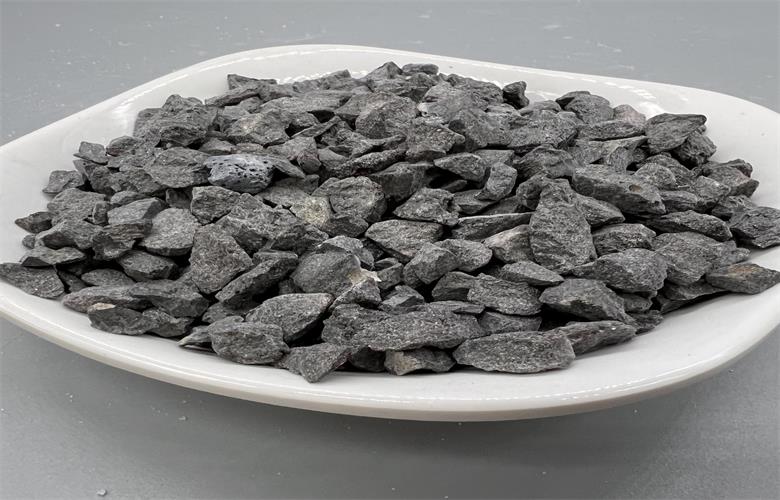
Corundum is a common refractory material. Corundum has high temperature resistance, high strength, high hardness, electrical insulation, corrosion resistance and other physical and chemical properties. It is widely used in refractory industry. The melting point of corundum is as high as 2050 ℃, the refractoriness of high-quality corundum products is above 1900 ℃, the softening temperature of the charge is about 1850 ℃, the ultimate service temperature is 1950 ℃, and the long-term service temperature is 1800 ℃. However, the thermal expansion coefficient of corundum is 8.6, which belongs to medium thermal shock resistant material. The hardness of corundum is 9, which is only lower than that of diamond and some highly hard synthetic minerals. Corundum raw materials can be divided into sintered corundum and fused corundum according to the production process.
1. Sintered corundum
Sintered corundum is a refractory clinker made of forged and burned alumina (or industrial alumina) sintered at a high temperature of 1750 to 1950 ° C. Sintered corundum with al2oa content of more than 399%, porosity of less than 4.0%, and bulk density of 3.55g · cm ³. It has good volume and chemical stability at high temperature, and is not corroded by reducing atmosphere, liquid molten glass and liquid metal. The mechanical strength and wear resistance are good at room temperature and high temperature.
1. Sintered corundum bauxite
Bauxite sintered corundum is mainly used in the abrasive industry.
2. Alumina sintered corundum
Refractory industry is commonly used: it is made of industrial alumina and sintered at high temperature. In order to facilitate sintering, alumina is usually micro crushed before forming. The fineness of alumina has an important influence on the densification of sintered alumina. The forming methods include pressing ball, vacuum extrusion, compact, etc. The bulk density of the blank should be improved as much as possible. Since the forging temperature is about 1750~1950 ℃, rotary kilns or vertical kilns are often used for forging and combustion. When the content of Al2O3 is low, it can also be forged in tunnel kiln.
3. Tabular corundum
Under the microscope, the crystal is in flat and short columnar structure, which is called tabular corundum and is white. It can be produced by sintering method and electric melting method. At present, most of the market is sintered tabular corundum. Tabular alumina, also known as tabular corundum, is a kind of recrystallization that is rapidly sintered and thoroughly sintered at a high temperature above 1900 ℃ α- The microstructure of Al2O3 has the following characteristics: α- The Al2O3 crystal is coarse, with a median diameter of 40-200 µ m, and its two-dimensional morphology is flat and interlaced with each other; α- Al2O3 crystal contains many 5~15 µ m round closed pores; There are few open pores, generally 2%~3%. It has excellent heating volume stability and thermal shock resistance.
2. Fused corundum
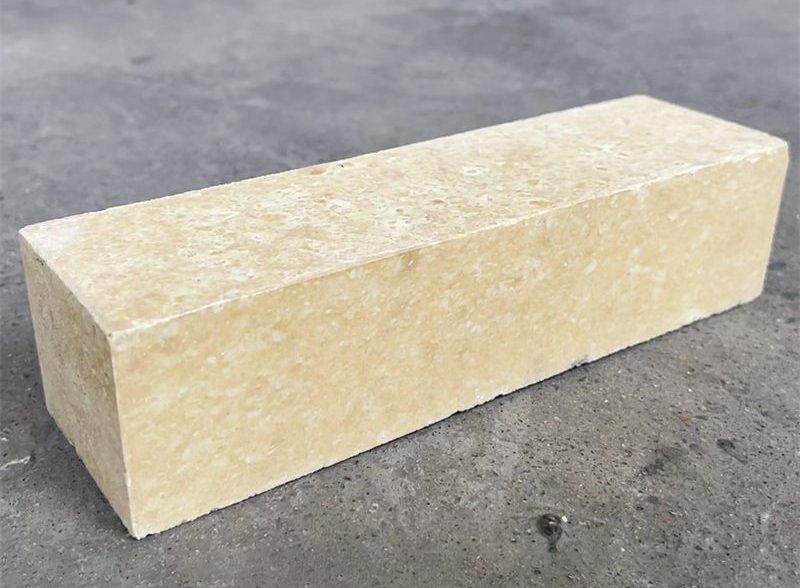
Electric fused corundum is made from calcined alumina or bauxite, which is melted in an electric arc furnace under reducing atmosphere, separated from metal and other impurities, and then condensed. According to the different raw materials and smelting processes used, common varieties are: fused white corundum, fused brown corundum, dense fused corundum (low porosity corundum), bauxite based fused corundum (commonly known as high alumina corundum, sub white corundum) and zirconium corundum.
1. White corundum
It is also known as "fused alumina". It is made of industrial alumina by melting at high temperature in an electric arc furnace. Its Al2O3 content is not less than 99%, white, block material, and the apparent porosity is 6%~10%. The main crystal phase is a-Al2O3. The crystals are long strip and diamond shaped, and often skeletal crystals. As the raw material is very pure, there is no chemical reaction in the electric furnace operation, but the temperature of the molten liquid, cooling speed, etc. have a great impact on the structure of the block. In terms of homogenization, it is important to obtain as dense a block as possible. Formed when Na2O in raw materials is solidified β- Al2O3 is easily concentrated in the central part of the block, which will have adverse effects on refractories and abrasives. Therefore, attention must be paid to the content of Na2O in raw materials. In addition, there is a small amount of nepheline and glass in the block.
2. Compact corundum
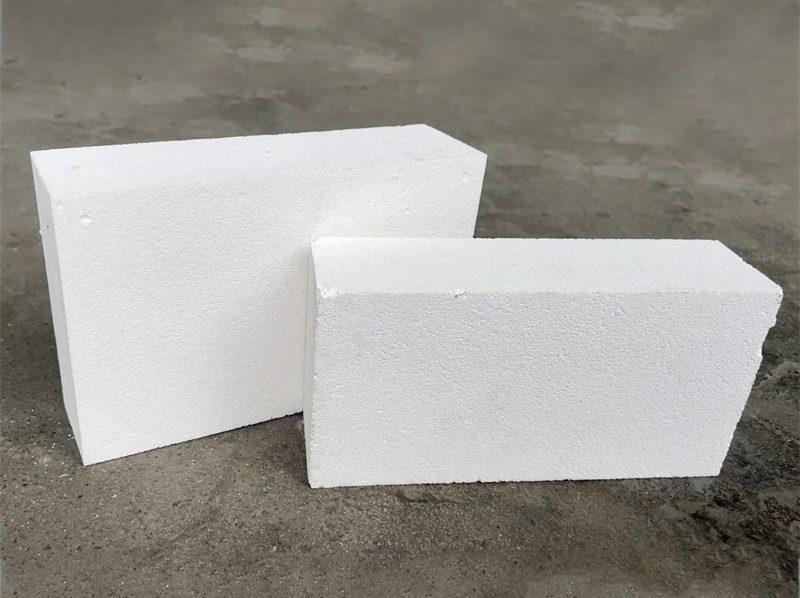
Dense fused corundum is made from industrial alumina by melting in an electric furnace with additives. The melting shall be strictly operated to control the excessive formation of carbide. Dense fused corundum is gray, gray black or gray white in appearance, Al2O3 is more than 98%, the apparent porosity is generally less than 4%, and the bulk density is more than 3.8g · cm 3. The main crystal phase is a-Al2O3, the secondary crystal phase is FeTiO3, CaAl12O9, Ca3Si8O9, TiN, Ti4O7, and a small amount of glass phase. The content of C in compact corundum should be ≤ 0.14% and should be reduced as much as possible β- Al2O3 is formed to improve the strength and corrosion resistance of corundum particles. When the carbide (Al4C3, Al4O4C, Al2C) contained in the fused corundum, the carbide can react with water at room temperature:
Al4C3+12H2O→4Al(OH)3+3CH4↑
This causes the powder formation of fused corundum particles. The preparation of unshaped refractories may cause the construction body to become loose, swollen, or even seriously cracked. Dense fused corundum is often used as aggregate in refractory products, and its application in amorphous refractories is expanding.
3. Subwhite corundum
Sub white corundum is also called fantu base fused corundum or high alumina corundum. It is made by melting light burned special grade or first grade bauxite loose material in electric arc furnace with reductant, settling agent, etc. The appearance and physical and chemical indexes are close to dense corundum. It is prepared by electromelting special grade or first grade bauxite under reducing atmosphere and controlled conditions. During melting, reductant (carbon), precipitator (iron filings) and decarburizer (iron scales) are added. In the middle and early stages of smelting, TiO2 is reduced and removed with excessive reductant. In the later stages of smelting, decarburizer or oxygen blowing is added to remove excessive carbon, so as to obtain white corundum. Its physical and chemical indexes are similar to those of dense fused corundum, and its color is also similar. Generally, the content of Al2O3 is more than 97%, and the apparent porosity is less than 4%; Corundum crystal is generally granular, with a size of 1-15mm; The main impurity minerals are calcium hexaaluminate (CA6), rutile, aluminum titanate and their solid solutions. However, there are higher titanium compounds in the mineral composition, and the thermal expansion coefficient is higher than that of densified fused corundum. It is applied to unshaped refractory materials, hot blast stove bricks and Al2O3-SiC-C bricks.
4. Brown corundum
Brown corundum is made by melting natural high alumina light burned material and carbon material with a small amount of iron filings in an electric arc furnace. Brown corundum is brown, generally Al2O3 ≥ 94.5%, SiO2 ≤ 3.5%, TiO2 ≤ 3.5%, Fe2O3 ≤ 1%. The mineral composition is mainly a-Al2O3. The central part of the crystal shape is diamond shaped, thick plate shaped and cracked particles. There are many silicon oxide and calcium oxide melt crystals around, which are long plate shaped, and the coarsest grains are skeleton like lamellae. As the impurities have not been completely removed, the brown corundum also contains rutile and other secondary phases, as well as glass phase, ferroalloy and solid solution. The hue of brown corundum depends to a large extent on the residual titanium oxide in the product. Brown corundum is mainly used as abrasive. In recent years, castables for iron runner of large and medium-sized blast furnaces, aggregates without water for iron blasting and raw materials for making ordinary corundum bricks (including high alumina silicon carbide bricks) have been used.