

Alumina bricks are a type of refractory material widely used in various industrial applications due to their excellent thermal properties. One question that often arises is whether alumina bricks are magnetic. In this blog post, I'll explore this topic in depth, drawing on my experience as a supplier of alumina bricks.
Understanding Alumina Bricks
Alumina bricks are primarily made from alumina (Al₂O₃), which is derived from bauxite ore through a series of refining processes. The high alumina content gives these bricks their exceptional heat resistance, making them suitable for use in environments where temperatures can reach extremely high levels, such as in furnaces, kilns, and incinerators.
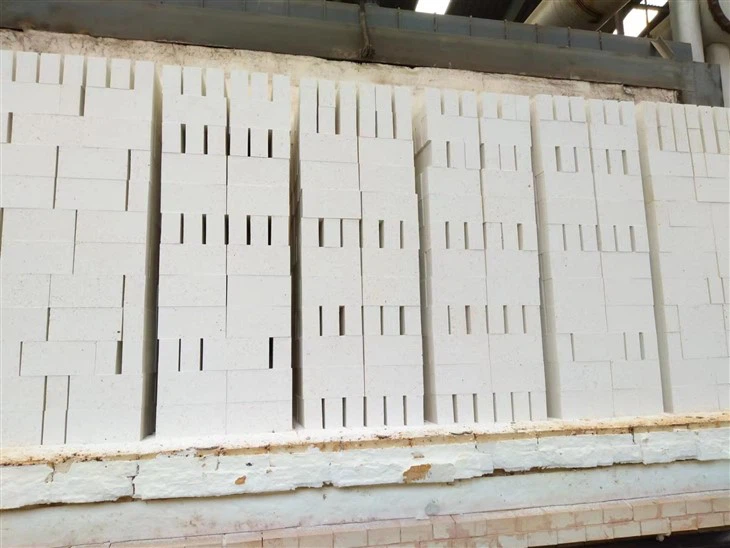
There are different types of alumina bricks available in the market, each with its own unique properties and applications. For instance, Andalusite Brick is a type of alumina brick that contains andalusite, a mineral that provides additional strength and thermal shock resistance. Refractory Anchoring Bricks are designed to anchor refractory linings in place, ensuring stability in high - temperature environments. And High Alumina Refractory Bricks have a very high alumina content, typically above 70%, which offers superior refractory performance.
The Magnetic Properties of Alumina
Alumina itself is a non - magnetic material. In its pure form, aluminum oxide has a crystal structure that does not exhibit magnetic behavior. The electrons in the aluminum and oxygen atoms are arranged in such a way that there is no net magnetic moment.
To understand this at a more fundamental level, we need to look at the concept of magnetism. Magnetism is related to the spin and orbital motion of electrons in atoms. In materials with magnetic properties, there are unpaired electrons that can align their spins in the presence of a magnetic field, creating a magnetic moment. In alumina, the electrons are paired in the atomic orbitals, and the overall magnetic moment is zero.
However, the situation can become more complex when considering real - world alumina bricks. During the manufacturing process, impurities may be introduced into the bricks. Some common impurities, such as iron oxides, can be magnetic. Iron has unpaired electrons in its atomic orbitals, and even a small amount of iron impurities in alumina bricks can give rise to some magnetic behavior.
Factors Affecting the Magnetic Behavior of Alumina Bricks
Impurity Content
As mentioned earlier, the presence of magnetic impurities like iron is a major factor that can make alumina bricks magnetic. The amount and distribution of these impurities play a crucial role. If the iron impurities are uniformly distributed throughout the brick, the magnetic effect may be relatively weak. However, if there are local concentrations of iron, the magnetic properties can be more pronounced.
Manufacturing Process
The manufacturing process of alumina bricks can also influence their magnetic behavior. For example, if the raw materials are not properly purified before being made into bricks, the impurity level will be higher. Additionally, the firing process can affect the crystal structure of the bricks and the behavior of impurities. High - temperature firing may cause some chemical reactions involving the impurities, which could either enhance or reduce their magnetic properties.
Heat Treatment
Heat treatment after the manufacturing process can also have an impact. Some heat treatment procedures can cause the redistribution of impurities within the brick, potentially changing its magnetic behavior. For example, annealing at a specific temperature may cause the magnetic impurities to form larger clusters, increasing the overall magnetic susceptibility of the brick.
Measuring the Magnetic Properties of Alumina Bricks
There are several methods to measure the magnetic properties of alumina bricks. One common method is to use a magnetic susceptibility meter. This device measures the degree to which a material is magnetized in the presence of an external magnetic field.
Another approach is to use a magnetometer, which can detect and measure the magnetic field generated by the brick itself. By comparing the magnetic readings of different alumina bricks, we can determine the relative magnetic properties and identify any bricks that may have abnormal magnetic behavior.
Applications and Implications of Magnetic Alumina Bricks
In most industrial applications of alumina bricks, magnetic properties are not a primary concern. The focus is usually on their refractory properties, such as heat resistance, thermal shock resistance, and mechanical strength. However, in some specific applications, the magnetic behavior of alumina bricks can have implications.
For example, in industries where magnetic fields are present, such as in some electrical or magnetic resonance applications, magnetic alumina bricks may cause interference. On the other hand, in some cases, the magnetic properties of alumina bricks can be used to their advantage. For instance, in magnetic separation processes, magnetic alumina bricks can be used to separate magnetic particles from non - magnetic ones.

Quality Control and Assurance
As a supplier of alumina bricks, quality control is of utmost importance. To ensure that our alumina bricks meet the required standards, we have a strict quality control process in place. This includes careful selection of raw materials to minimize the presence of magnetic impurities.
We also conduct regular magnetic property tests on our products. By using advanced testing equipment, we can accurately measure the magnetic susceptibility of our alumina bricks and ensure that they fall within the acceptable range. If any bricks are found to have excessive magnetic properties, they are either re - processed or removed from the production line.
Conclusion
In conclusion, pure alumina bricks are generally non - magnetic due to the non - magnetic nature of alumina itself. However, the presence of magnetic impurities, the manufacturing process, and heat treatment can all cause alumina bricks to exhibit some magnetic behavior.
As a supplier of high - quality alumina bricks, we are committed to providing products that meet the specific needs of our customers. Whether you need non - magnetic alumina bricks for applications where magnetic interference is a concern or are interested in the potential uses of magnetic alumina bricks, we can offer you the right solutions.
If you are in the market for alumina bricks and would like to discuss your requirements in detail, please feel free to reach out to us. We are here to assist you in finding the most suitable alumina bricks for your industrial applications.
References
- Handbook of Refractory Materials, Second Edition, by John N. Kennedy
- Physical Chemistry of Materials: Energy, Structure, and Dynamics, by Marc De Graef and Michael E. McHenry
- "Magnetic Properties of Oxide Materials" by Robert C. O'Handley in Encyclopedia of Materials: Science and Technology


