

As a trusted supplier of alumina bricks, I'm excited to take you on a detailed journey through the manufacturing process of these essential refractory materials. Alumina bricks are widely used in various industries due to their excellent heat resistance, mechanical strength, and chemical stability. In this blog, I'll explain the step-by-step process of how alumina bricks are manufactured, providing you with valuable insights into their production.
Raw Material Selection
The first and most crucial step in manufacturing alumina bricks is the careful selection of raw materials. Alumina, or aluminum oxide (Al₂O₃), is the primary ingredient. High - quality bauxite, a naturally occurring ore rich in alumina, is often the main source. Other raw materials may include clays, which act as binders during the manufacturing process, and additives that can enhance specific properties of the bricks.
The purity of the alumina content in the raw materials is of utmost importance. Higher alumina purity generally leads to better heat resistance and mechanical properties of the final product. Our company sources raw materials from reliable mines and suppliers, and we conduct strict quality control tests to ensure the raw materials meet our high - standards.
Grinding and Mixing
Once the raw materials are selected, they are transferred to the grinding stage. The raw materials are ground into fine powders using milling equipment such as ball mills or rod mills. Grinding is essential to increase the surface area of the particles, which improves reactivity during subsequent processes and helps ensure a homogeneous mixture.
After grinding, the various raw material powders are mixed together in precise proportions. The mixing process can be carried out in mechanical mixers that ensure thorough blending of the components. During this stage, water is usually added to form a workable paste. The consistency of the paste is carefully controlled to ensure it has the right plasticity for the next step, the forming process.
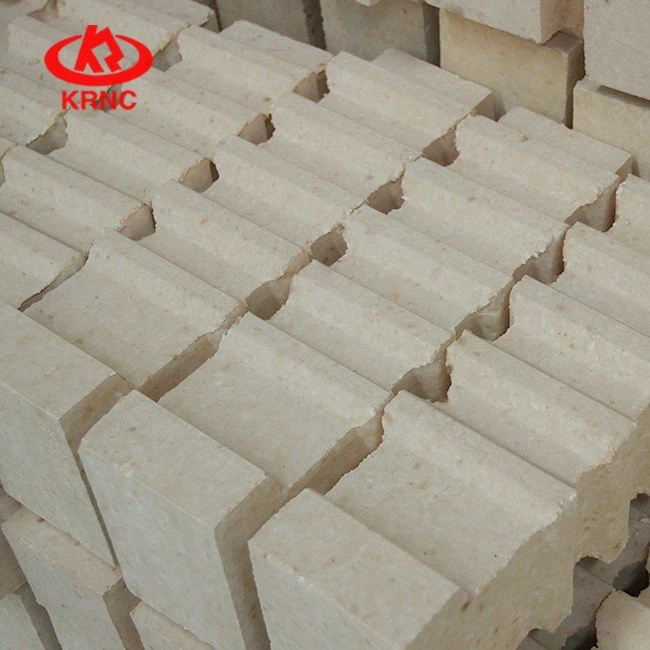

Forming
There are several methods for forming alumina bricks, and the choice depends on the desired shape, size, and quality of the final product.
Pressing
One of the most common methods is pressing. In the pressing process, the prepared paste is placed into molds and then subjected to high pressure using hydraulic presses. Pressing forms the bricks into their desired shapes with high precision. The pressure applied during this process helps to compact the particles, resulting in a dense and strong brick structure. Different types of presses can be used, such as friction presses or screw presses, depending on the production requirements.
Extrusion
Extrusion is another forming method, especially suitable for producing bricks with a consistent cross - section, such as rectangular or cylindrical shapes. The paste is forced through a die using an extruder, which shapes the material into the desired form. After extrusion, the extruded bricks are cut to the appropriate length. This method allows for high - speed production and can be easily automated.
Drying
After the bricks are formed, they contain a significant amount of moisture from the water added during the mixing process. Drying is necessary to remove this moisture to prevent cracking during subsequent firing. The drying process is carefully controlled to ensure a uniform evaporation of moisture.
The formed bricks are placed in drying chambers or ovens, where the temperature and humidity are precisely regulated. The drying time can range from several hours to several days, depending on the size and complexity of the bricks. Slow and controlled drying is crucial to avoid thermal stresses that could lead to cracks or other defects in the bricks.
Firing
Firing is the final and most critical step in the manufacturing of alumina bricks. It involves heating the dried bricks to high temperatures in a kiln to achieve the desired physical and chemical properties.
The firing process is usually carried out in two stages: pre - firing and high - temperature firing. During pre - firing, the bricks are heated to a relatively low temperature (around 400 - 600°C) to remove any remaining volatile substances and to start the initial chemical reactions. This helps to prevent sudden expansion and cracking when the bricks are exposed to higher temperatures later.
The high - temperature firing stage is where the significant changes occur. The bricks are heated to temperatures typically between 1400°C and 1800°C, depending on the alumina content and the final properties required. At these high temperatures, the raw materials undergo a series of chemical and physical changes, such as sintering. Sintering is the process by which the individual particles bond together, forming a dense and strong ceramic structure.
The firing time and temperature profile are carefully monitored to ensure optimal results. Over - firing or under - firing can lead to inferior quality bricks. Our state - of - the - art kilns are equipped with advanced temperature control systems to ensure consistent and high - quality firing.
Quality Control
Throughout the manufacturing process, strict quality control measures are implemented. After firing, the alumina bricks are carefully inspected for various quality parameters. These include dimensions, density, porosity, mechanical strength, and thermal properties.
Dimensional accuracy is crucial to ensure that the bricks fit properly in the intended applications. Density and porosity affect the heat - insulating properties and the durability of the bricks. Mechanical strength tests, such as compressive strength tests, are conducted to ensure that the bricks can withstand the mechanical stresses in actual use.
Different Types of Alumina Bricks
There are several types of alumina bricks available, each designed for specific applications. For example, Refractory Anchoring Bricks are used to anchor refractory linings in high - temperature furnaces, providing stability. Refractory Runner Brick is commonly used in foundries to guide molten metal, requiring excellent thermal shock resistance and chemical stability. Andalusite Brick is made from andalusite, an aluminum silicate mineral, and offers good thermal insulation and high - temperature performance.
Conclusion
The manufacturing of alumina bricks is a complex and precise process that requires careful attention to every step, from raw material selection to final quality control. As a supplier of alumina bricks, we are committed to producing high - quality products that meet the diverse needs of our customers. Whether you need bricks for industrial furnaces, foundries, or other high - temperature applications, our alumina bricks offer reliable performance.
If you are interested in purchasing alumina bricks for your project, we invite you to contact us for further discussions. Our team of experts is ready to provide you with detailed product information, technical support, and competitive pricing. Let's work together to find the best alumina brick solutions for your business.
References
- "Refractory Materials Handbook", CRC Press
- "The Science and Technology of Refractories", Elsevier


