

As a supplier of Ceramic Fiber Cloth, I'm often asked about its composition. Ceramic Fiber Cloth is a remarkable material with a wide range of applications, especially in high - temperature environments. In this blog, I'll delve into the details of what makes up this useful product.
Basic Components of Ceramic Fiber Cloth
At its core, Ceramic Fiber Cloth is primarily composed of ceramic fibers. These fibers are typically made from alumina (Al₂O₃) and silica (SiO₂). The ratio of alumina to silica can vary, and this variation affects the properties of the final product.
Alumina is a key component in ceramic fibers. It provides high - temperature resistance and excellent mechanical strength. Alumina has a high melting point, which allows the ceramic fibers to withstand extreme heat without significant deformation or degradation. In addition, alumina contributes to the chemical stability of the fibers, making them resistant to many corrosive substances.
Silica, on the other hand, acts as a binder and also enhances the flexibility of the ceramic fibers. It helps to hold the alumina particles together, creating a cohesive fiber structure. Silica also has good thermal insulation properties, which are crucial for the performance of Ceramic Fiber Cloth in high - temperature applications.
Manufacturing Process and Its Impact on Composition
The manufacturing process of Ceramic Fiber Cloth plays a vital role in determining its exact composition. One common method of producing ceramic fibers is the melt - blowing process. In this process, a mixture of alumina and silica powders is melted at extremely high temperatures, usually above 2000°C. The molten material is then blown through small nozzles using high - pressure air or steam. This rapid cooling process solidifies the molten droplets into fine ceramic fibers.
During the melt - blowing process, other additives may be introduced to enhance specific properties of the fibers. For example, some manufacturers may add small amounts of zirconia (ZrO₂) to improve the high - temperature stability and resistance to thermal shock. Zirconia has a high melting point and can form a stable crystal structure at high temperatures, which helps to prevent the fibers from cracking or breaking when exposed to sudden temperature changes.
After the fibers are produced, they are woven into a cloth. The weaving process can also affect the composition of the final product. Sometimes, organic binders are used during the weaving process to hold the fibers together temporarily. However, these organic binders are usually removed through a heat - treatment process, leaving behind only the ceramic fibers.
Additional Layers and Coatings
In some cases, Ceramic Fiber Cloth may have additional layers or coatings to enhance its performance. For instance, a layer of silicone rubber may be applied to one or both sides of the cloth. Silicone rubber provides excellent flexibility and waterproofing properties, making the cloth suitable for applications where it needs to be bent or where it may come into contact with moisture.
Another common coating is a graphite coating. Graphite has high thermal conductivity and lubricating properties. A graphite - coated Ceramic Fiber Cloth can be used in applications where heat dissipation is important, such as in some industrial heating elements. The graphite coating also reduces friction, which can be beneficial in applications where the cloth is in contact with moving parts.

Comparison with Related Products
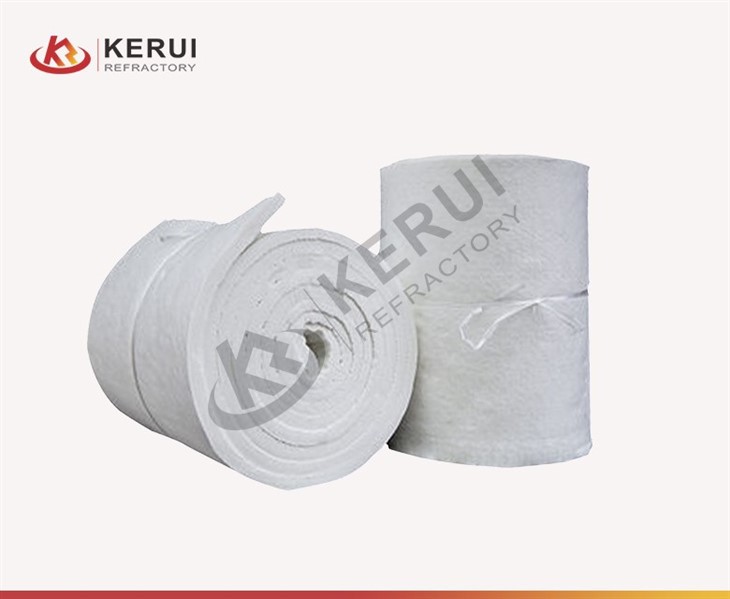
When comparing Ceramic Fiber Cloth with other ceramic fiber products like Refractory Ceramic Fiber Blanket and High Temperature Ceramic Fiberboard, there are some differences in composition and properties.
Refractory Ceramic Fiber Blankets are usually made from a looser arrangement of ceramic fibers. They are more flexible and have better insulation properties compared to Ceramic Fiber Cloth. The composition of refractory ceramic fiber blankets is also mainly alumina and silica, but the fiber density and orientation are different. The fibers in blankets are often randomly distributed, which allows for better trapping of air and thus better thermal insulation.
High Temperature Ceramic Fiberboards, on the other hand, are more rigid and have a higher density of ceramic fibers. They are made by compressing ceramic fibers together, sometimes with the addition of binders. The composition of fiberboards may be similar to that of Ceramic Fiber Cloth, but the manufacturing process results in a more solid and durable product. Fiberboards are often used in applications where structural support is required in high - temperature environments.
Applications and Composition Requirements
The applications of Ceramic Fiber Cloth also influence its composition requirements. In the aerospace industry, where weight is a critical factor, the cloth may be made with a higher proportion of lightweight ceramic fibers. The fibers may also be treated to have a lower density while still maintaining high - temperature resistance.
In the automotive industry, Ceramic Fiber Cloth is often used for heat shielding in engine compartments. For this application, the cloth may need to have good flexibility and resistance to oil and grease. A coating or treatment may be applied to the cloth to make it more resistant to these substances.
In the industrial furnace industry, the composition of Ceramic Fiber Cloth is optimized for high - temperature insulation and long - term durability. The cloth needs to withstand continuous exposure to high temperatures, sometimes for months or even years. Therefore, a higher proportion of alumina and the addition of stabilizers like zirconia are common in these applications.
Quality Control and Composition Analysis
As a supplier of Ceramic Fiber Cloth, we pay great attention to quality control. We use advanced analytical techniques to ensure that the composition of our products meets the required standards. One such technique is X - ray fluorescence (XRF) analysis. XRF analysis can accurately determine the elemental composition of the ceramic fibers, including the amounts of alumina, silica, zirconia, and other additives.
We also conduct physical and chemical tests on our products to evaluate their performance. For example, we test the thermal conductivity, tensile strength, and resistance to thermal shock of the Ceramic Fiber Cloth. These tests help us to ensure that the composition of our products is optimized for their intended applications.
Conclusion
In conclusion, the composition of Ceramic Fiber Cloth is a complex combination of alumina, silica, and sometimes other additives like zirconia. The manufacturing process, additional layers, and coatings all contribute to the final composition and properties of the product. Understanding the composition of Ceramic Fiber Cloth is essential for selecting the right product for specific applications.
If you are in need of high - quality Ceramic Fiber Cloth for your project, whether it's for aerospace, automotive, or industrial furnace applications, we are here to help. Our products are carefully crafted to meet the highest standards of quality and performance. Contact us for more information and to discuss your specific requirements. We look forward to the opportunity to work with you and provide you with the best Ceramic Fiber Cloth solutions.
References
- "Ceramic Fibers: Processing, Properties, and Applications" by John B. Wachtman
- "Handbook of Advanced Ceramics: Materials, Applications, Processing, and Properties" edited by Cheol - Sang Kim and Nae - Eun Lee


