

What is the specific heat capacity of ceramic fiber paper?
As a supplier of Ceramic Fiber Paper, I often encounter customers who are curious about the technical properties of our products. One of the most frequently asked questions is about the specific heat capacity of ceramic fiber paper. In this blog post, I will delve into what specific heat capacity is, why it matters for ceramic fiber paper, and provide some insights into its typical values.
Understanding Specific Heat Capacity
Specific heat capacity, often denoted as (c), is a physical property of a substance. It is defined as the amount of heat energy required to raise the temperature of a unit mass of the substance by one degree Celsius (or one Kelvin). The SI unit for specific heat capacity is joules per kilogram per Kelvin (J/(kg·K)).
Mathematically, the relationship between heat energy ((Q)), mass ((m)), specific heat capacity ((c)), and temperature change ((\Delta T)) is given by the formula (Q = mc\Delta T). This formula is fundamental in thermodynamics and helps engineers and scientists understand how materials respond to heat.
Why Specific Heat Capacity Matters for Ceramic Fiber Paper
Ceramic fiber paper is widely used in high - temperature applications such as insulation in furnaces, kilns, and industrial ovens. The specific heat capacity of ceramic fiber paper plays a crucial role in these applications for several reasons:
- Energy Efficiency: A material with a lower specific heat capacity requires less energy to heat up. In insulation applications, this means that ceramic fiber paper can reach the desired temperature more quickly with less energy input. This leads to reduced energy consumption and lower operating costs for industrial processes.
- Thermal Response: The specific heat capacity affects how quickly the material can absorb and release heat. In applications where rapid heating and cooling cycles are involved, a material with an appropriate specific heat capacity can ensure efficient operation and prevent thermal shock to the equipment.
- Heat Storage: In some cases, the ability of ceramic fiber paper to store heat is important. A higher specific heat capacity allows the material to store more heat energy, which can be beneficial in applications where heat needs to be retained over a longer period.
Specific Heat Capacity of Ceramic Fiber Paper
The specific heat capacity of ceramic fiber paper can vary depending on several factors, including its composition, density, and temperature. Generally, the specific heat capacity of ceramic fiber paper ranges from approximately 0.8 to 1.2 J/(g·K) at room temperature.
As the temperature increases, the specific heat capacity of ceramic fiber paper also tends to increase. This is because the internal energy of the material changes with temperature, and more energy is required to increase the temperature at higher temperatures. For example, at high temperatures (around 1000°C), the specific heat capacity of ceramic fiber paper can reach values of up to 1.5 J/(g·K).
It is important to note that these values are approximate and can vary depending on the specific product and manufacturing process. Our company conducts rigorous testing to ensure that our ceramic fiber paper meets the highest quality standards and provides consistent specific heat capacity values.
Factors Affecting Specific Heat Capacity
- Composition: The chemical composition of ceramic fiber paper has a significant impact on its specific heat capacity. Different ceramic materials have different atomic structures and bonding energies, which affect how they absorb and store heat. For example, ceramic fiber paper made from alumina - silica fibers may have a different specific heat capacity compared to paper made from zirconia - based fibers.
- Density: The density of ceramic fiber paper can also influence its specific heat capacity. A higher - density material generally has a higher specific heat capacity because it contains more mass per unit volume. However, the relationship between density and specific heat capacity is not always linear and can be affected by other factors such as porosity.
- Temperature: As mentioned earlier, the specific heat capacity of ceramic fiber paper increases with temperature. This is due to the change in the vibrational and rotational energy of the atoms and molecules in the material at higher temperatures.
Applications and Related Products
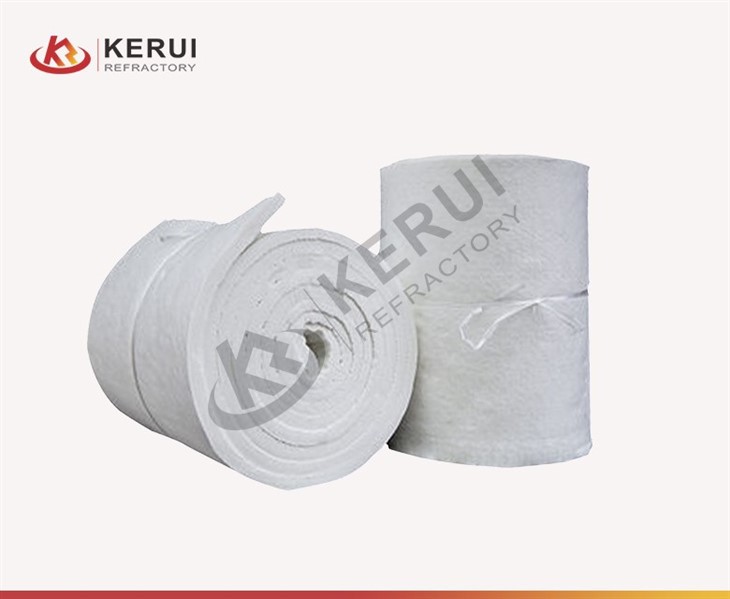
Ceramic fiber paper is just one of the many ceramic fiber products we offer. In addition to ceramic fiber paper, we also supply Refractory Ceramic Fiber Blanket and High Temperature Ceramic Fiberboard. These products have similar properties and applications but may have different specific heat capacities depending on their design and intended use.
Refractory ceramic fiber blankets are commonly used for insulation in large - scale industrial furnaces and boilers. They offer excellent thermal insulation properties and can withstand high temperatures. High - temperature ceramic fiberboards, on the other hand, are more rigid and are often used in applications where structural support is required, such as furnace linings and kiln furniture.
Conclusion
The specific heat capacity of ceramic fiber paper is an important property that affects its performance in high - temperature applications. Understanding this property can help engineers and designers select the most suitable material for their specific needs. As a supplier of Ceramic Fiber Paper, we are committed to providing high - quality products with consistent and reliable specific heat capacity values.
If you are interested in learning more about our ceramic fiber paper or other related products, such as Refractory Ceramic Fiber Blanket and High Temperature Ceramic Fiberboard, please feel free to contact us. We have a team of experts who can provide you with detailed technical information and assist you in finding the best solution for your application. Whether you are looking to improve energy efficiency, enhance thermal performance, or reduce operating costs, our products can meet your requirements. Reach out to us today to start a conversation about your procurement needs.

References
- Incropera, F. P., & DeWitt, D. P. (2002). Fundamentals of Heat and Mass Transfer. John Wiley & Sons.
- Touloukian, Y. S., & Ho, C. Y. (1970). Thermophysical Properties of Matter. IFI/Plenum.


