

What is the Compressive Strength of Mullite Bricks?
As a supplier of Mullite bricks, I often encounter inquiries regarding the compressive strength of these high - performance refractory materials. Compressive strength is a crucial property that determines the suitability of Mullite bricks for various industrial applications. In this blog, I will delve into the concept of compressive strength, its significance in Mullite bricks, and the factors that influence it.
Understanding Compressive Strength
Compressive strength refers to the maximum amount of compressive stress a material can withstand before it fails or deforms permanently. In the context of Mullite bricks, it is measured in units of force per unit area, typically megapascals (MPa). When a Mullite brick is subjected to a compressive load, it resists the force until it reaches its breaking point. The higher the compressive strength, the more load the brick can bear without crumbling or cracking.
Significance of Compressive Strength in Mullite Bricks
Mullite bricks are widely used in high - temperature industrial environments, such as furnaces, kilns, and incinerators. In these applications, the bricks are exposed to heavy loads, thermal stress, and chemical corrosion. A high compressive strength is essential for several reasons:
- Load - bearing capacity: In furnaces and kilns, Mullite bricks are stacked on top of each other to form the lining. They need to support the weight of the structure above them as well as any additional loads from the materials being processed. A brick with low compressive strength may crack or break under the weight, leading to structural failure and potential safety hazards.
- Thermal shock resistance: High - temperature environments often involve rapid heating and cooling cycles, which can cause thermal stress in the bricks. A brick with good compressive strength can better withstand the internal stresses generated by thermal expansion and contraction, reducing the risk of cracking and spalling.
- Chemical corrosion resistance: In some industrial processes, Mullite bricks are exposed to corrosive chemicals. A strong brick structure can resist the penetration of these chemicals, protecting the integrity of the lining and extending its service life.
Factors Affecting the Compressive Strength of Mullite Bricks
The compressive strength of Mullite bricks is influenced by several factors, including:
- Raw materials: The quality and composition of the raw materials used to make Mullite bricks play a significant role in determining their compressive strength. High - purity alumina and silica sources are preferred, as they result in a more uniform and dense structure. Impurities in the raw materials can weaken the brick and reduce its strength.
- Manufacturing process: The manufacturing process, including the mixing, forming, and firing of the bricks, can also affect their compressive strength. Proper mixing ensures a homogeneous distribution of the raw materials, while accurate forming techniques result in a well - shaped and dense brick. The firing temperature and duration are critical factors; a higher firing temperature can promote the formation of a stronger crystal structure in the Mullite bricks.
- Porosity: Porosity is the measure of the void spaces within a brick. A lower porosity generally indicates a higher compressive strength, as there are fewer weak points in the structure. Manufacturers can control porosity through the use of binders, additives, and specific manufacturing techniques.
Typical Compressive Strength of Mullite Bricks
The compressive strength of Mullite bricks can vary depending on their grade and application. Generally, commercial Mullite bricks have a compressive strength ranging from 50 MPa to 200 MPa. High - quality, dense Mullite bricks used in demanding industrial applications can have compressive strengths exceeding 200 MPa.
For example, in a steelmaking furnace, where the bricks are exposed to extremely high temperatures and heavy loads, bricks with a compressive strength of 150 - 200 MPa are often used. On the other hand, in less demanding applications such as some ceramic kilns, bricks with a compressive strength of 50 - 100 MPa may be sufficient.
Applications Based on Compressive Strength
Different applications require Mullite bricks with specific compressive strengths. Here are some examples:
- Steel industry: In steelmaking furnaces, including basic oxygen furnaces (BOFs) and electric arc furnaces (EAFs), Mullite bricks with high compressive strength are essential. These bricks line the hearth, walls, and roof of the furnaces, where they are exposed to molten steel, slag, and high - temperature gases. The high compressive strength ensures that the bricks can withstand the mechanical and thermal stresses of the steelmaking process.
- Ceramics industry: In ceramic kilns, Mullite bricks are used to line the firing chambers. Depending on the type of ceramic being produced and the firing conditions, bricks with varying compressive strengths can be used. For high - temperature firing of advanced ceramics, bricks with higher compressive strengths are preferred to resist the thermal and mechanical stresses.
- Glass industry: In glass melting furnaces, Mullite bricks are used in areas where they are in contact with molten glass. The compressive strength of the bricks is important to prevent deformation and ensure a long service life. The bricks need to withstand the weight of the molten glass and the thermal cycling associated with the melting process.
Related Products and Their Compressive Strength Considerations
Apart from Mullite bricks, there are other types of refractory bricks that are also used in industrial applications. These include Refractory Runner Brick, Andalusite Brick, and Refractory Anchoring Bricks.
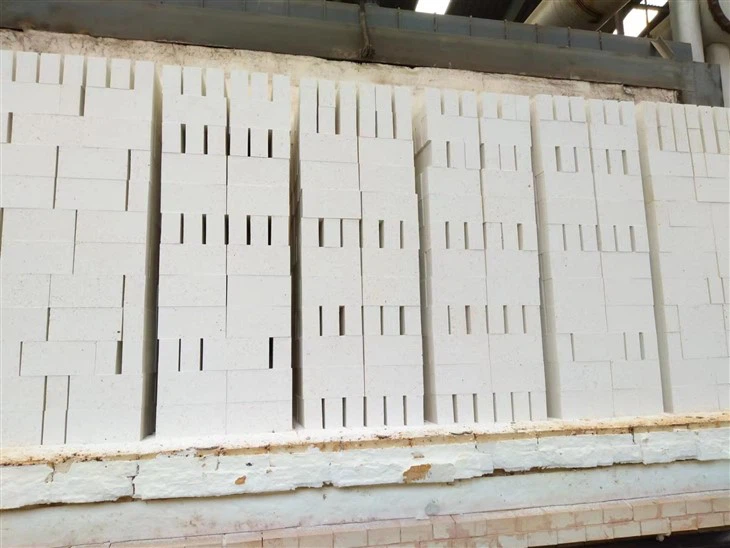

Refractory Runner Bricks are used to guide the flow of molten metal in foundries. They need to have a sufficient compressive strength to withstand the impact and abrasion of the flowing metal. Andalusite Bricks, which are also alumina - based refractory materials, have unique thermal expansion properties. Their compressive strength is important for maintaining the structural integrity of the lining in high - temperature applications. Refractory Anchoring Bricks are used to secure the refractory lining in place. A high compressive strength is necessary to ensure that they can hold the lining firmly and resist the forces acting on it.
Conclusion
The compressive strength of Mullite bricks is a critical property that determines their performance in high - temperature industrial applications. As a supplier, I understand the importance of providing high - quality Mullite bricks with the appropriate compressive strength for each customer's specific needs. By carefully selecting the raw materials, controlling the manufacturing process, and testing the final products, we can ensure that our Mullite bricks meet the highest standards of quality and performance.
If you are in the market for Mullite bricks or any other refractory products and have questions about their compressive strength or other properties, I encourage you to reach out for a detailed discussion. We are committed to providing you with the best solutions for your industrial refractory needs.
References
- Schneider, H., & Somers, J. (2002). Refractories Handbook. ASM International.
- Reed, J. S. (1995). Principles of Ceramic Processing. Wiley - Interscience.


